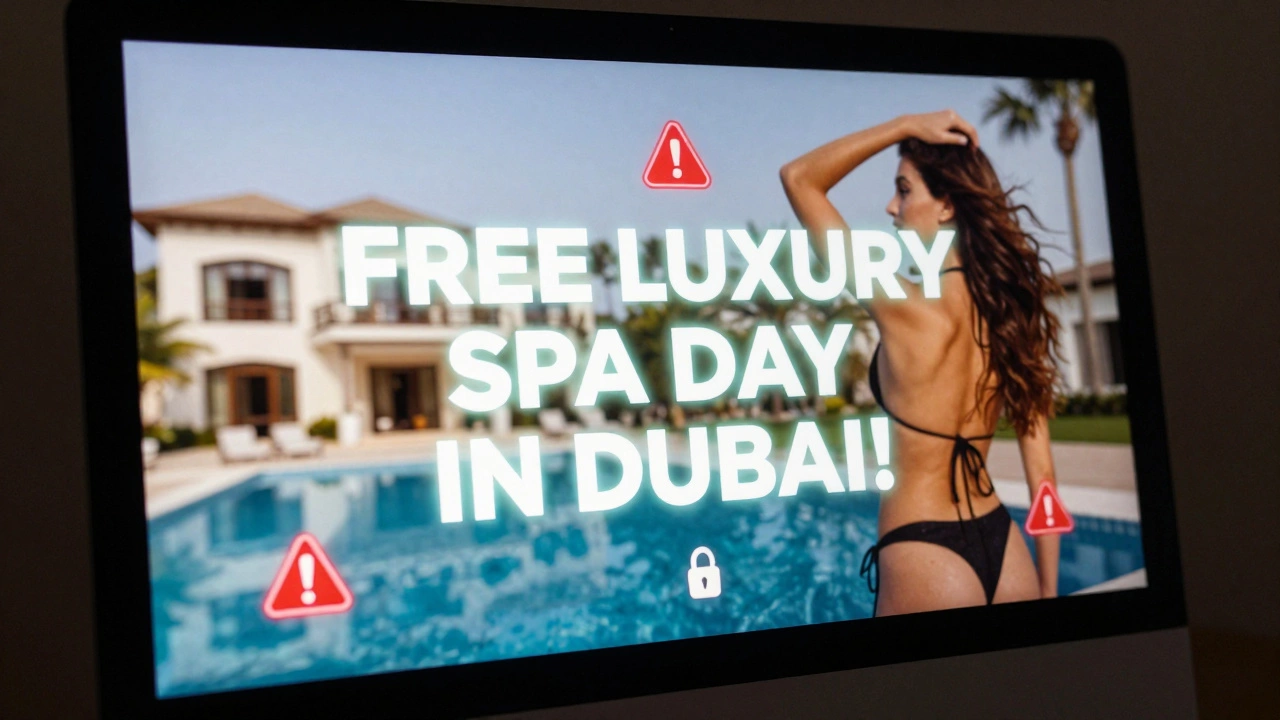
Ever opened your browser and seen an ad that just felt… off? Not just annoying - but actually suspicious? You’re not imagining it. Ads today are more aggressive, more clever, and sometimes downright deceptive. If your ad looks too good to be true, it probably is. And if it’s pushing something like milf escort dubai, you should be extra cautious. These aren’t just bad ads - they’re often gateways to scams, malware, or identity theft.
Ads that promise quick cash, free vacations, or secret services like happy ending dubai or dubai marina escort aren’t selling products. They’re selling trust. And they’re betting you’ll click before you think. Most of these ads come from unverified networks, fake websites, or bots that buy ad space by the thousands. They don’t care if you’re fooled - they just need you to click.
What Makes an Ad Look Suspicious?
Suspicious ads don’t always scream "scam." Sometimes they look professional. But there are clear patterns. Look for these red flags:
- Spelling or grammar mistakes in the headline or description
- Images that look stocky, blurry, or reused across dozens of sites
- Urgency tactics: "Limited time!" "Only 3 left!" "Act now or miss out!"
- Too-good-to-be-true offers: "Earn $5,000 a week from home!" "Free iPhone if you click!"
- Links that don’t match the domain - like an ad for a bank that leads to a .xyz URL
These aren’t random mistakes. They’re signs the ad was created quickly, cheaply, and without oversight. Legitimate businesses invest in clean design, clear messaging, and verified domains. Scammers don’t.
Why Do These Ads Even Exist?
Ad networks like Google Ads or Meta Ads have strict policies - but they’re not perfect. Bad actors use automated tools to create thousands of fake ads in minutes. They test them across platforms, and when one slips through, it runs for hours or days before being caught. Some even use stolen brand logos or fake customer reviews to look real.
These ads thrive on distraction. They don’t need to convince everyone - just enough people to make a profit. One click from a tired parent scrolling at midnight, one purchase from someone desperate for a quick fix. That’s all they need.
How Do These Ads Get On Your Screen?
You might think you’re safe because you use Chrome or Safari. But ad networks don’t just show ads on websites. They show them in apps, on YouTube, even in pop-ups disguised as system alerts. Some are delivered through compromised websites you’ve visited before. Others come from ad injectors - malware that hijacks your browser and inserts fake ads no matter what site you’re on.
Even if you don’t click, seeing these ads can be dangerous. Some use tracking scripts to collect your browsing habits, location, or device info. That data gets sold to third parties - sometimes to advertisers, sometimes to criminals.
What Should You Do When You See One?
Don’t click. Don’t hover. Don’t even pause too long.
- Close the tab or app immediately.
- Run a quick scan with your antivirus or malware tool - even if you think you’re clean.
- Report the ad. On Chrome, click the three dots in the top right, go to "Help," then "Report an issue." On mobile, long-press the ad and select "Report this ad."
- Check your browser extensions. Some shady ads come from fake extensions that slipped in during a software install.
If you’ve already clicked, change passwords for any accounts you logged into recently. Use a password manager to generate strong, unique ones. Enable two-factor authentication everywhere you can.
How to Protect Yourself Long-Term
Prevention is better than cleanup. Here’s how to reduce your exposure:
- Install an ad blocker like uBlock Origin - it blocks 90% of malicious ads without slowing your browser.
- Keep your browser and operating system updated. Patches often fix security holes that ads exploit.
- Never download software from an ad. Even if it says "Free PDF Reader" or "Update Flash Player." Go directly to the official site.
- Use a privacy-focused search engine like DuckDuckGo instead of Google. Less tracking means fewer targeted scams.
- Be skeptical of ads that ask for personal info - even just your email or phone number. Legit companies don’t need it upfront.
What Happens If You Click?
Clicking one of these ads doesn’t always mean disaster - but it opens the door. You might get:
- A fake antivirus popup telling you your device is infected - then demanding payment to "fix" it
- A phishing page that looks like your bank login - stealing your username and password
- A hidden crypto miner that uses your computer’s power to earn money for someone else
- A download that installs spyware, logging your keystrokes or recording your screen
Some of these attacks are silent. You won’t notice anything wrong until your bank account is drained or your identity is used to open credit cards. That’s why acting fast matters.
Real Examples From Real People
Last month, a woman in Toronto saw an ad for "free luxury spa day in Dubai" with a photo of a beachside villa. She clicked - and was redirected to a site asking for her credit card to "reserve her spot." She didn’t pay, but her browser started redirecting to random sites. After running a scan, she found a keylogger installed. It had captured her online banking login.
A student in Vancouver clicked an ad promising "free Netflix premium" and ended up downloading a fake app that stole his Instagram password. The scammer changed his profile, posted fake ads for happy ending dubai, and sent direct messages to his contacts asking for money.
These aren’t rare. They happen every day.
Who’s Behind These Ads?
Most aren’t run by one person. They’re part of organized networks - sometimes based overseas - that operate like factories. One team creates the ads. Another handles the landing pages. A third manages the payment collection. Some even have customer service bots that reply to complaints with canned messages like "We’re sorry for your inconvenience. Please try again."
They’re hard to shut down because they move fast. When one domain gets blocked, they switch to another. When one ad network bans them, they find a new one. And because they target people who aren’t tech-savvy, they keep making money.
Final Thought: Trust Your Gut
If an ad makes you feel uneasy - even a little - walk away. You don’t need to understand how it works to know it’s dangerous. Your instincts are your best defense. Advertisers want you to feel excited, curious, or rushed. Don’t let them. Pause. Think. Close it.
Most ads you see are harmless. But the ones that aren’t? They’re designed to look like the rest. That’s why awareness matters more than ever.